What a Registered Business Address Means Under ACRA in Singapore
In Singapore, every business entity must maintain a registered office address that is publicly listed with the Accounting and Corporate Regulatory Authority. This is where all communications and notices to the company are directed, including:
This address is a core part of your company's identity from day one. You must provide a registered address at the point of business registration, and it must remain current with ACRA at all times.
The registered office must be a physical location in Singapore and accessible to the public during normal business hours. An address cannot be a P.O. box address or a post office box of any kind. If you operate from a residential address, you need to obtain approval under the Home Office Scheme, which is administered in coordination with the Housing Development Board for HDB properties or the Urban Redevelopment Authority for private residential premises. There are specific types of businesses that can be used as a home-based operation, and eligibility requirements apply.
Because this information is publicly searchable, your registered address is often one of the first details prospective clients, investors, and banking partners review. It appears on ACRA records, contracts, invoices, and business cards. In practical terms, it becomes part of your brand footprint.
There is also a clear distinction between a registered address and a principal place of business. A contact address used for day-to-day operations may differ from the address listed on your corporate records. Some firms operate from multiple sites while maintaining one official registered office. However, external stakeholders rarely separate these nuances. They see a single address and form an immediate impression about stability, scale, and professionalism.
For B2B organisations targeting enterprise clients, that first impression can shape procurement decisions. An address in a recognised commercial district signals permanence and governance standards, while a residential or obscure location can create friction during due diligence.
How Corporate Clients Interpret Your Business Address
Corporate decision makers rarely evaluate a supplier on capability alone. They assess risk, governance, and long-term reliability. Your registered business address in Singapore quietly feeds into that evaluation.
When a company is listed in Raffles Place, Marina Bay, or another established CBD location, it communicates a range of positive signals:
-
Financial stability and visible investment in infrastructure
-
Accessibility for in-person meetings
-
Alignment with established enterprises and institutions
By contrast, a residential unit or lesser-known industrial address can raise internal questions during procurement reviews. Compliance teams may scrutinise the business more closely. Legal departments may request additional documentation. None of this is fatal, but it introduces friction into the sales cycle. In competitive B2B environments, friction delays decisions. Delays often favour incumbents.
Many enterprise buyers perform basic checks before shortlisting vendors. A quick ACRA search, a Google lookup of the building name, and a glance at nearby tenants can all influence whether your proposal moves forward. If your growth strategy depends on attracting multinational clients, financial institutions, or government contracts, the perception created by your registered office address deserves deliberate consideration.
The Hidden Commercial Costs of a Weak Registered Address
A registered address that lacks commercial credibility rarely causes a single dramatic loss. Instead, it creates a pattern of smaller commercial disadvantages that compound over time.
The first issue is trust acceleration. In B2B sales, credibility shortens the evaluation cycle. When your company is anchored to a recognised business district, stakeholders feel reassured about governance, permanence, and oversight. When the address appears residential or temporary, additional verification steps often follow.
Banking and compliance processes can also become more complex. Financial institutions conduct enhanced due diligence on companies with unconventional addresses. This may include additional documentation requests, delayed account approvals, or stricter transaction monitoring. If you are a business seeking to establish strong banking relationships, these delays can be costly.
Partnership negotiations can subtly shift in tone as well. Larger organisations may push for stricter payment terms or request advance assurances if they perceive higher operational risk. A partner evaluating your company during early discussions will often reference your corporate record, and the address listed there carries more weight than many business owners realise.
These costs are not always visible in financial statements, but they show up as:
-
Longer sales cycles
-
Lower initial trust levels
-
Increased administrative workload
-
Reduced negotiating leverage
For companies positioning themselves as premium B2B providers, these indirect costs can erode margins and slow expansion. Over time, the address on your corporate record influences how confidently others choose to engage with you.
What Premium B2B Clients Expect From a Singapore CBD Address
Enterprise clients and institutional partners look for signals of operational maturity. A Singapore CBD address, particularly in Marina Bay or Raffles Place, communicates that your company operates within a recognised financial and commercial framework.
For procurement teams, location forms part of risk profiling. A central business district address suggests structured administration, reliable mail handling, and proximity to legal, banking, and regulatory institutions. It also indicates readiness for in-person meetings in a professional environment.
Premium B2B buyers typically value:
-
Transparent corporate records
-
Stable long-term premises
-
Access to formal meeting facilities
-
Professional reception and call handling
These elements reduce perceived counterparty risk. When a supplier is based in a Grade A commercial tower, the assumption is that governance standards align with established market norms.
That perception shapes early trust formation and carries real weight in competitive tenders, where multiple vendors may offer similar pricing and capability. In those scenarios, environmental cues often influence final decisions. A credible address supports your positioning as a serious operator within Singapore's financial ecosystem.
How Upgrading to Serviced Offices Singapore Strengthens Client Confidence
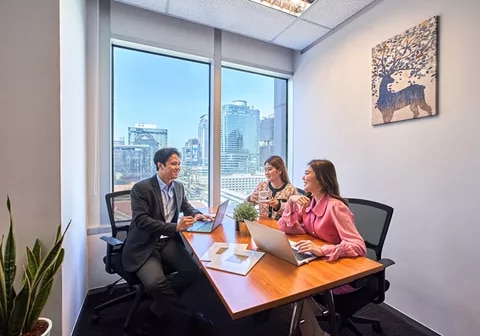
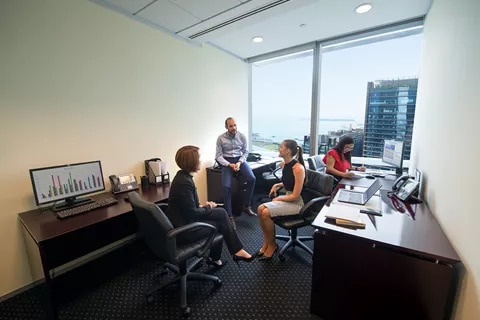
For companies seeking a stronger market position, upgrading to Serviced Offices in Singapore provides an immediate credibility shift. A premium serviced office in a recognised CBD tower offers a compliant registered address, professional reception support, and access to boardrooms within a respected commercial setting.
This upgrade affects more than aesthetics. It reshapes how stakeholders interpret your operational substance. When your registered office sits in Marina Bay Financial Centre, Raffles Place, or a comparable Grade A development, it aligns your brand with established financial institutions and multinational firms. The address can be used as your official registered office address with ACRA, and the mailing address for your company ensures that all communications and notices reach you reliably.
A premium serviced office environment typically delivers:
-
Dedicated front desk representation
-
Secure mail and document handling
-
Meeting rooms suitable for enterprise discussions
-
Tenancy arrangements recognised by banks and regulators
These office services remove doubt during due diligence. Procurement teams can verify your address in a known business district. Banking officers see a conventional commercial footprint. Prospective clients feel comfortable attending in-person meetings.
For growth-focused B2B companies, a serviced office functions as a structural investment in credibility, operational clarity, and deal velocity within Singapore's corporate landscape. You need to consider whether the address currently listed for your company reflects the level of service and professionalism your clients expect.
Frequently Asked Questions